Dental Crowns in Brunswick
 Living with a damaged tooth can be incredibly frustrating. Maybe it’s a crack that catches when you chew. Perhaps a heavily filled tooth feels like it could break. Or maybe you’ve had root canal care and your dentist has recommended acrown to support the remaining tooth structure.
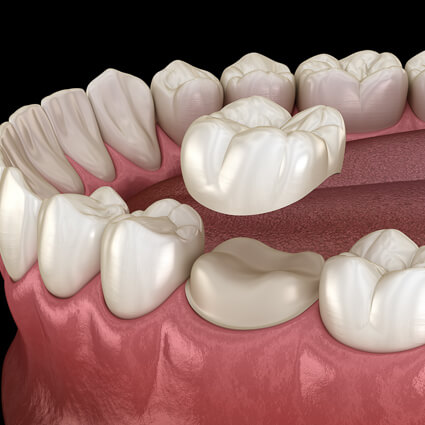
At Brunswick Road Dental, we provide custom dental crowns designed to improve strength, function and appearance for teeth that need more support than a filling can offer. A crown is a tooth-shaped cover that fits over the visible part of a tooth, helping protect it from further wear. Each crown is made to suit your bite and match the look of nearby teeth as closely as possible.
What Is a Dental Crown?
A dental crown is a cap that covers a tooth from the gum line up. It’s commonly used when a tooth is weakened, heavily restored, cracked, or worn down and needs full coverage. Crowns can also be used after root canal care, or to improve the look of a tooth that’s misshapen or discoloured.
When Might a Crown Be Recommended?
Crowns aren’t always the first choice, but they may be recommended when a tooth needs more coverage and support. Common reasons include:
- A tooth with a large filling and limited natural structure remaining
- A cracked or broken tooth needing full coverage
- A tooth after root canal care
- Severe wear from grinding or erosion
- A tooth with shape or colour concerns where a veneer isn’t suitable
Crown Options at Brunswick Road Dental
We recommend crown materials based on the tooth’s location, the forces it needs to handle, and your cosmetic preferences.
Porcelain or ceramic crowns
Often chosen for front teeth or visible areas. These materials can be matched to the shade and translucency of natural teeth.
Zirconia crowns
A strong, tooth-coloured material often considered for back teeth where chewing forces are higher. It can also be suitable for patients who grind their teeth, depending on individual factors.
We’ll talk you through what’s most appropriate for your tooth and explain the pros and cons of each option.
A Conservative Approach
We only recommend crowns when they’re clinically appropriate. If a filling, onlay, or bonding is likely to meet your needs, we’ll discuss those options. When a crown is the best fit, we aim to preserve as much natural tooth structure as possible while creating space for a well-fitting restoration.
What To Expect During Crown Treatment
Crown treatment typically involves two appointments, though timing can vary.
- Assessment and planning (including digital imaging if needed)
- Tooth preparation (local anaesthetic is typically used)
- Impressions or digital scans to design your crown
- Temporary crown in many cases while the final crown is made
- Final crown placement with bite checks and adjustments
- Review if needed to confirm comfort and function
Longevity and Care
Crowns can last many years, but lifespan depends on the material, location in the mouth, oral hygiene, diet, and habits like clenching or grinding. Brushing twice daily, flossing, and regular checkups help support long-term wear. If you grind your teeth, a night guard may be recommended to reduce stress on both the crown and surrounding teeth.
Costs and Health Fund Claims
Crown fees vary depending on the material, tooth position, and whether additional work is needed (such as a build-up). We’ll provide a clear estimate before starting, including what’s recommended and why.
We’re preferred providers for Medibank, Bupa, HCF and Defence Health, and we can process claims in practice where applicable. Payment plan options may also be available – ask our team.
Frequently Asked Questions
Are crowns covered by health funds?
Schedule a Consultation
If you’ve been advised to consider a crown – or you’re not sure what your tooth needs – book a consultation at our practice today. We’ll assess your tooth, explain suitable options, and outline expected costs so you can make an informed decision.
Book a Crowns Consultation
